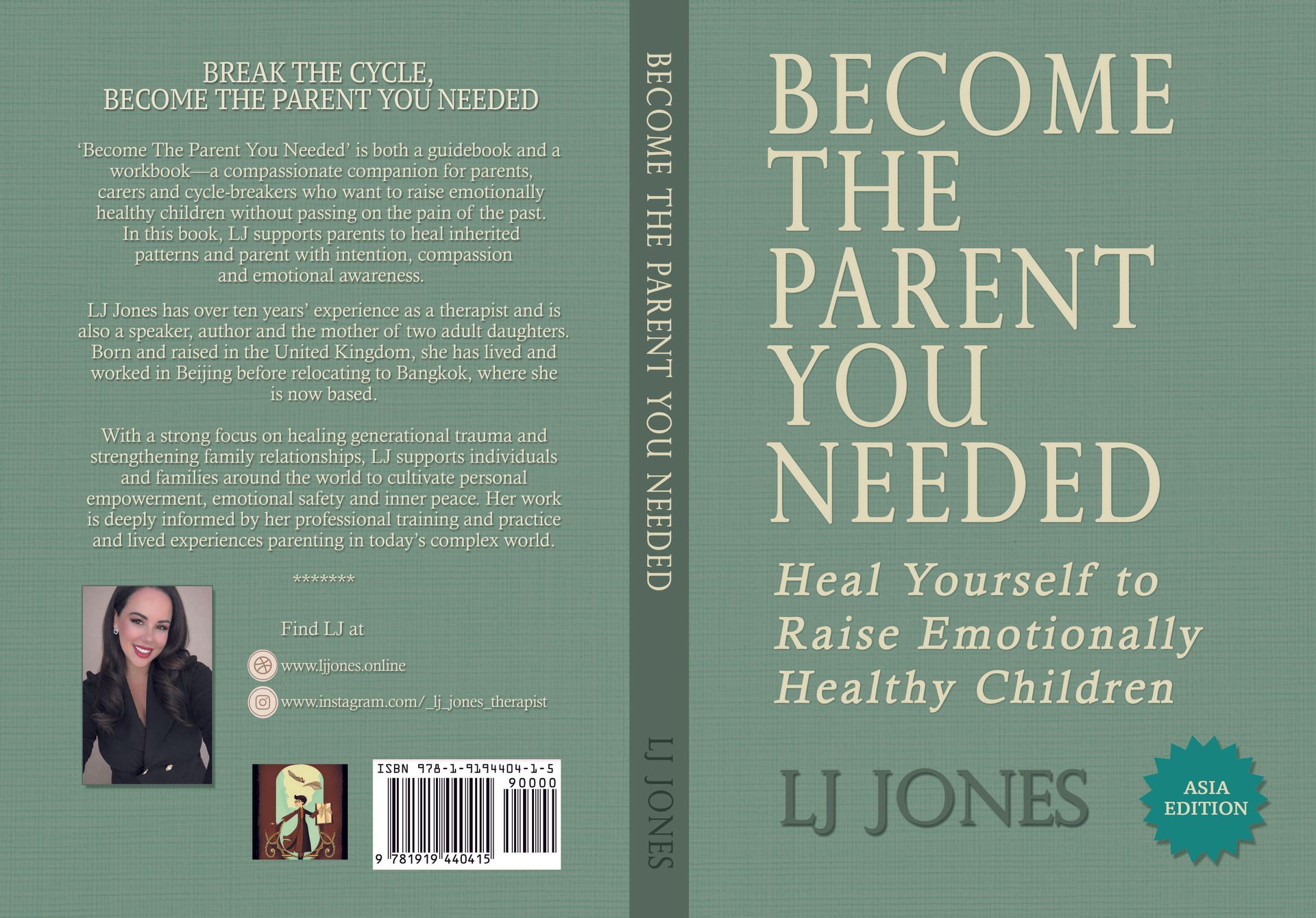
New Review: 'Become the Parent You Needed' By LJ Jones. (ShadowScript Publications).
TS
'Become the Parent You Needed' is a transformative guide that positions parental self-healing as the foundation for raising emotionally healthy children. Jones, a therapist with extensive experience in family work and child protection, crafts an accessible yet profound resource that moves beyond conventional parenting advice to address the deeper psychological work necessary for genuine change.
The book's central argument is both simple and powerful: parents cannot effectively nurture their children's emotional wellbeing without first attending to their own unresolved wounds. Rather than offering a prescriptive formula for "good parenting," Jones recognises that parenting styles are inherited patterns, not chosen strategies, and that awareness and healing must precede behavioral change. This therapeutic foundation sets the book apart from more surface-level parenting manuals.
The author draws on developmental neuroscience to establish why early experiences matter. She explains that the first seven years of life are formative, when children's brains are especially "absorbent," wiring themselves in response to relationships and experiences. This scientific grounding gives parents a framework for understanding why their own childhood matters now.
Jones's blend of personal narrative, clinical insight, and culturally informed perspectives is one of the book's greatest strengths. She opens with her own story, writing as a single mother of two daughters over twenty years, which humanises the work and signals that the book is written by someone who has walked this difficult path. Her training in therapy is evident throughout, particularly in how she guides readers toward self-awareness and reflection rather than judgment.
The structure is logical and progressive. Readers first examine their own childhood stories and whether their core needs, emotional, physical, social, and spiritual, were met. Subsequent chapters build on this foundation, moving through breaking generational cycles, re-parenting the inner child, and understanding what children actually need. Topics like emotional intelligence, resilience, presence, and creating harmonious homes are woven together coherently, each chapter reinforcing earlier insights.
Practical elements enhance the book's utility. Throughout, Jones includes reflective questions, breathing exercises, and techniques like the "Anger Volcano" metaphor which helps children understand that anger is often the visible surface of deeper, unmet emotions like sadness or loneliness. These tools make the book feel less like theory and more like a workbook readers can actively engage with.
Jones demonstrates genuine cultural awareness, acknowledging traditions where honouring parents is deeply valued, such as Indian concepts of "Maatru Devo Bhava" and Chinese filial piety principles. She also recognises that not all parent-child relationships are safe or intact, inviting readers to engage with their own history "in whatever way feels right for you." This inclusive stance is important, as it prevents the book from appearing tone-deaf to the complex realities many families face.
While the book is comprehensive, its breadth is also a potential limitation. Ten chapters covering everything from understanding growth to parenting in a changing world means some topics receive relatively brief treatment and readers seeking deeper exploration of specific challenges, such as parenting children with particular behavioural or developmental needs, may want supplementary resources. This might be an idea for book 2!
The book's therapeutic focus, while a strength, also means it asks readers to do significant inner work. For readers who are exhausted, in crisis, or resistant to self-reflection, the emphasis on personal healing before behavioural change might feel overwhelming. Jones does provide disclaimers that the book is educational rather than therapeutic and encourages readers to seek professional support, which is appropriate given the sensitive material. Again, book 2 required LJ...
Become the Parent You Needed is ideal for parents at any stage who recognise that their own childhood is influencing their parenting today and are motivated to change that pattern. It serves single parents, co-parents, grandparents, and caregivers of all cultural backgrounds and socioeconomic circumstances. The book works best for readers willing to pause, reflect, and sometimes sit with uncomfortable truths about their own upbringing.
This is not a quick-fix parenting manual. Instead, it's an invitation to deep, compassionate work with yourself first, and through that transformation, with your children. Jones's core message, that your childhood does not define your worth or determine your parenting, and that healing is possible, is hopeful without being naive. She acknowledges the real pressures of modern parenting (financial strain, cultural expectations, technological change) while maintaining that intentional self-awareness and emotional healing remain the most powerful tools any parent possesses.
For anyone ready to break inherited patterns and raise the next generation with greater emotional freedom and resilience, this book offers both the compass and the map. A really interesting read.
- Karen Gallen, Book Reviewer (July 2026).